2026-11-09 · Javier Morales
Mold Prevention After Summer Storms in Miami
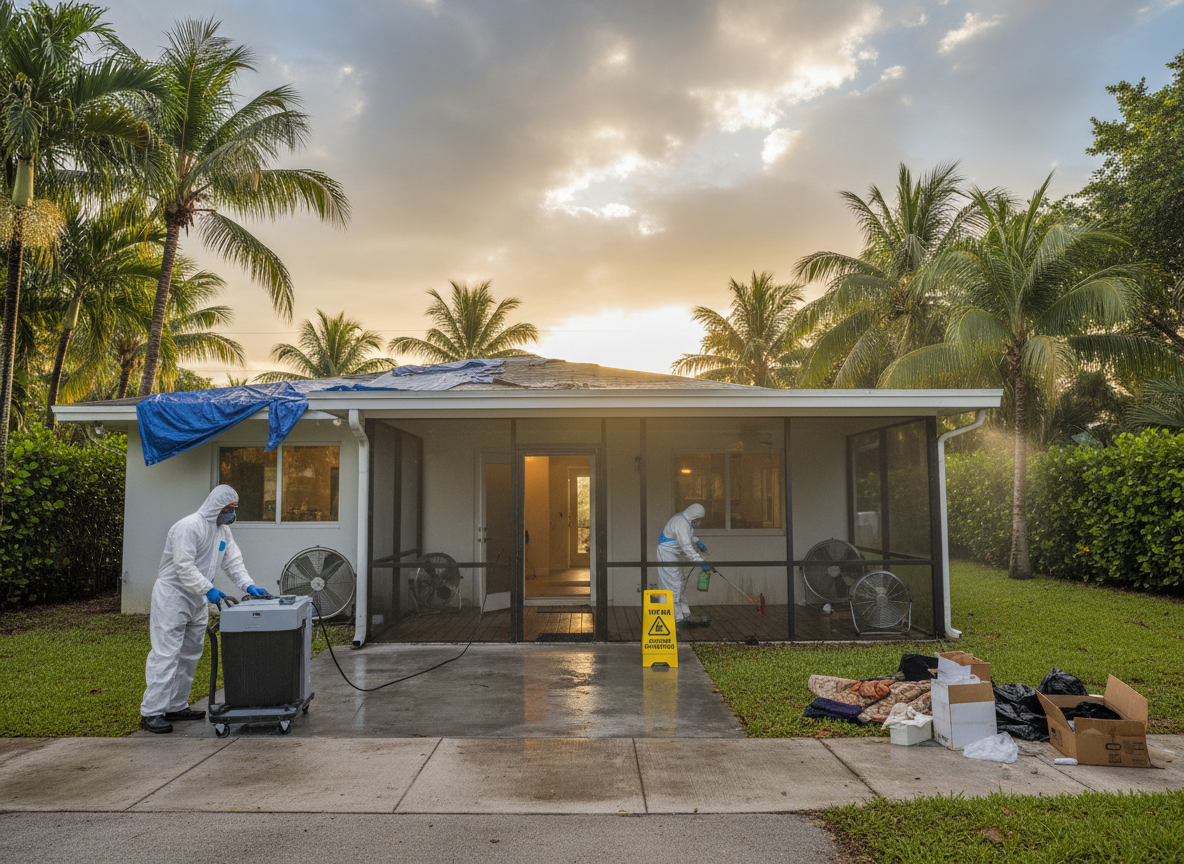
After summer storms in Miami, mold colonies can begin forming within 24-48 hours on wet drywall, carpet, or wood unless excess water is removed and surfaces are dried below 60 percent relative humidity. The tropical monsoon climate delivers heavy afternoon downpours that pool against foundations in low-lying blocks of Overtown and flood ground-floor units in Brickell high-rises. Older housing stock built before 1970 in Little Havana and Wynwood often lacks modern vapor barriers, so water migrates quickly into wall cavities. Prompt extraction and dehumidification stop growth before spores spread through HVAC systems common in Coral Gables and Coconut Grove homes.
Miami Storm Patterns and Moisture Sources
Summer storms drop several inches of rain in hours, overwhelming street drainage in Design District alleys and sending water under doors in single-story homes near the Design District. High humidity lingers for days afterward, keeping indoor moisture levels elevated even after visible water recedes. Low spots around Vizcaya Museum and near the Miami River retain water longer because of the flat terrain and high water table in Miami-Dade County. These conditions differ from drier inland neighborhoods and require faster drying times to protect plaster walls and hardwood floors found in pre-war buildings.
Immediate Drying Steps for Common Miami Materials
Remove standing water with wet vacuums within the first four hours, then place air movers and dehumidifiers to pull moisture from concrete slabs typical in Overtown apartments. Cut away saturated baseboards and drywall at least 12 inches above the water line to expose hidden dampness in Little Havana bungalows. For carpet installed over concrete in Coral Gables ranch homes, lift and discard padding that holds water against the slab. Monitor moisture meters daily until readings drop below 15 percent on wood framing. Homeowners in Wynwood lofts should also check behind floating shelves where leaks from upper units travel downward.
Long-Term Prevention in Miami-Dade Homes
Install French drains around foundations in flood-prone pockets of Downtown Miami to route water away before it reaches crawl spaces. Replace carpet with tile or sealed concrete in ground-floor rooms of Brickell condos that see repeated storm surge. Clean gutters monthly during hurricane season to prevent overflow onto stucco walls common in the Design District. Run whole-house dehumidifiers set to 50 percent during the wettest months to keep humidity from condensing on metal ductwork in older Coconut Grove residences. See the related guide on Hurricane Season Flood Prep for Miami Homes for seasonal checklists that pair with these steps.
When Professional Water Removal Becomes Necessary
If water reaches electrical outlets or soaks more than 10 square feet of drywall, contact a restoration crew that serves Miami Beach and Hialeah. Technicians use industrial desiccant dryers that reduce drying time by half compared with consumer units in high-humidity conditions. They also document moisture levels for insurance claims on properties near Freedom Tower or Marlins Park. For repair pricing details that vary by neighborhood and material, review What Affects Water Damage Repair Costs in Miami. Our team at 2642 NW 26th St, Miami, FL 33142 is available Mon–Fri 8am–6pm and Sat 9am–2pm to assess hidden moisture after storms.