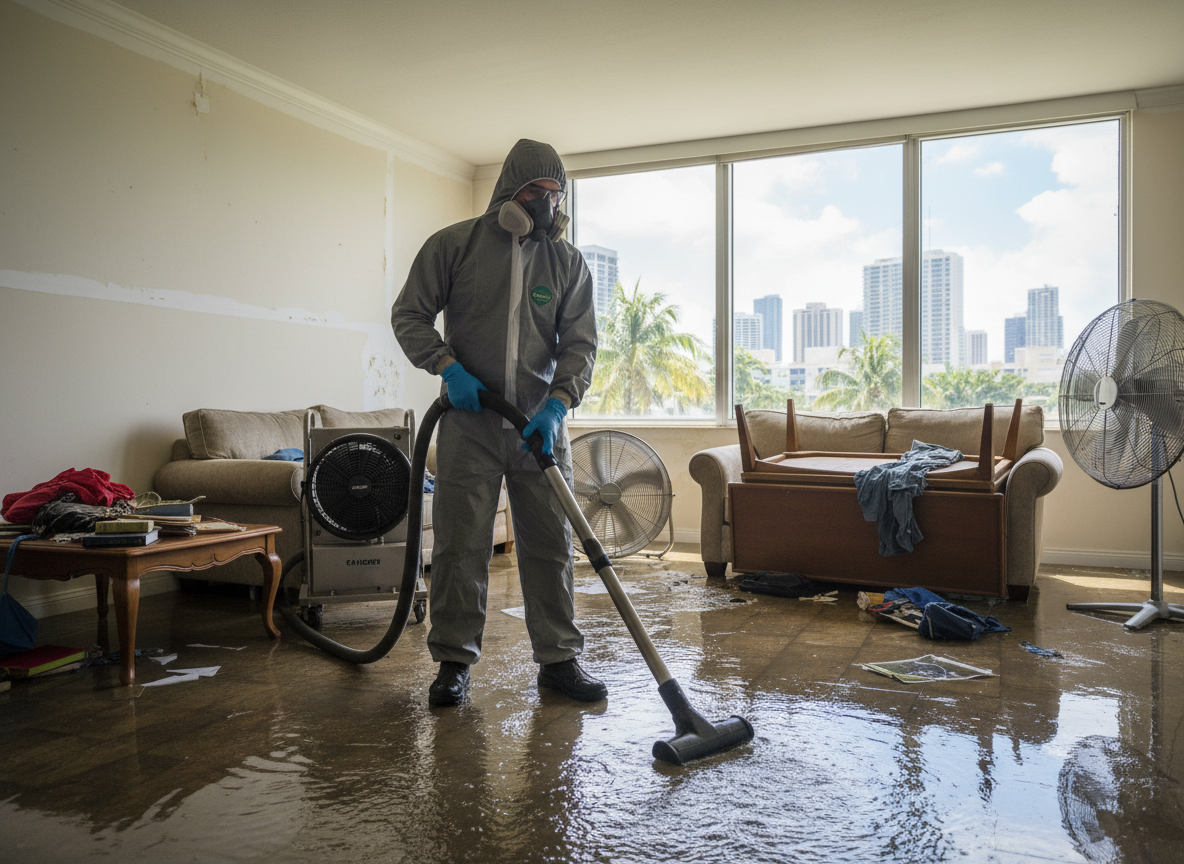
Miami's tropical monsoon climate brings intense summer downpours that overwhelm drainage in low-lying spots like Overtown and Little Havana. Older single-family homes with slab foundations in these neighborhoods often see water migrate under tile or hardwood, while high-rises in Brickell and the Design District face pipe bursts that travel between floors through shared concrete structures. Quick extraction matters because humidity stays high year-round and mold can appear in under 48 hours on drywall or insulation.
Water tables sit close to the surface across much of Miami-Dade County, so even moderate rain can push moisture through foundation cracks in Coconut Grove cottages or Coral Gables estates built before modern waterproofing standards. Restoration crews must pull baseboards, use moisture meters on subfloors, and run commercial dehumidifiers longer than in drier climates to reach acceptable readings. Skipping hidden wall cavities or under-cabinet areas leaves residual moisture that later damages cabinets or triggers insurance disputes.
Storm surge and wind-driven rain affect waterfront blocks near Vizcaya Museum and Bayside Marketplace more than inland streets. Technicians familiar with these zones know to check for salt-water residue that corrodes metal fasteners and requires extra rinsing before drying. In Wynwood and the Design District, converted warehouse spaces with exposed brick and metal roofs create different challenges: water travels along steel beams and pools in unexpected corners that standard residential protocols miss.
Local building practices mean many homes in Hialeah and Miami Beach have flat roofs and stucco exteriors that trap water behind the finish. Restoration work here routinely includes removing sections of stucco to inspect wood framing, then coordinating with licensed contractors for code-compliant replacement. Homeowners who delay inspection after a roof leak often discover the damage has already reached neighboring units in attached townhomes.
Technician insight
In Miami the thing that catches most people out with water damage restoration is how fast mold takes hold once summer humidity combines with a slab leak or roof intrusion. Older homes in Little Havana and Wynwood often have layered flooring that hides moisture for weeks, so we always pull baseboards and check under cabinets even when the visible puddle looks small.
Hidden Moisture in Wynwood Loft
A client in Wynwood reported water stains on a concrete floor after heavy rain. Inspection found a roof membrane failure that allowed water to travel along steel beams into an interior wall cavity. We extracted standing water, opened the wall, and ran drying equipment for six days until readings matched the rest of the unit. No mold developed and the space was ready for new flooring within two weeks.
Water Damage Restoration Services We Offer
✓Emergency Water Extraction
Rapid removal of standing water from homes and condos in Brickell and Downtown Miami using truck-mounted pumps and portable extractors to limit secondary damage.
✓Structural Drying Services
Placement of commercial air movers and dehumidifiers in affected rooms across Miami-Dade County to bring moisture levels down after leaks or storms.
✓Slab Leak Detection and Repair
Location and mitigation of under-slab leaks common in older Coral Gables and Coconut Grove properties where high water tables push moisture through foundations.
✓Post-Storm Water Cleanup
Clearing wind-driven rain and minor surge water from properties near Bayside Marketplace and Freedom Tower, including salt residue removal.
✓Hidden Moisture Assessment
Use of infrared cameras and pin meters to find trapped water inside walls and ceilings in Wynwood lofts and Little Havana bungalows before mold develops.
Water Damage Restoration Cost in Miami, FL
| Service | Typical Range | What Affects It |
|---|---|---|
| Emergency Water Extraction | $600–$1,800 | Varies with volume and whether work is on upper floors of Brickell condos. |
| Full Structural Drying | $800–$2,500 | Longer run times required during Miami's humid summer months. |
| Slab Leak Assessment | $350–$750 | Includes moisture mapping; repair billed separately after detection. |
| Hidden Wall Cavity Drying | $500–$1,200 | Common in older Little Havana and Overtown homes with plaster walls. |
Ranges are typical for Miami, FL and confirmed with an exact written quote before any work starts.
How it works
- 1
On-Site Assessment
Technician inspects all affected rooms, measures moisture in floors and walls, and notes construction type common to the neighborhood.
- 2
Water Removal
Standing water is extracted with appropriate equipment sized for the volume and access constraints of Miami high-rises or older homes.
- 3
Drying And Monitoring
Equipment runs with daily moisture readings until levels match unaffected areas, accounting for local humidity.
- 4
Final Documentation
Photos and readings are provided for insurance and any required Miami-Dade County permits before contents are returned.
Pricing
Upfront written estimates after inspection; final cost depends on water volume, affected materials, and access in multi-story buildings.